

Guide to feedback
All writers benefit from sharing their work and getting helpful feedback from others. However, both giving and receiving critique can seem daunting. With that in mind, Hinckley Scribblers have produced this guide on how to give and receive writerly feedback.
How to give feedback
When a writer shares something with a writing group, it’s best to remember that their piece is usually a work in progress. The idea of feedback is to give the writer helpful views and suggestions to encourage them to improve and keep writing, rather than to review their work as though it were a final, polished item.
Karen Hertzberg writes on the Grammarly blog (see Resources) that this requires a ‘deft touch’. She describes how she thought she’d given a useful critique to a writer friend about her novel, only to find out later that the friend had been devastated by her comments and put off writing for months. Which leads to the first point:
Encouragement and the art of diplomacy
The tone of comments should always be encouraging. Writers can be very unsure and sensitive about their work and may feel vulnerable revealing it to the scrutiny of others. Even famous authors are not immune to self-doubt:
“The first problem of any kind of even limited success is the unshakable conviction that you are getting away with something, and that any moment now they will discover you.”
Neil Gaiman
A writer’s discomfort might be accentuated by receiving feedback in a group environment, so it’s important to provide all feedback with tact and diplomacy. Not all feedback has to be positive. Negative critique is very valuable, guiding a writer’s attention to areas of improvement. However, sharing only negative feedback is discouraging to both the recipient and the group as a whole.
The feedback sandwich
A ‘feedback sandwich’ is favoured by many people and organisations, including the Open University. The ‘meat’ of a criticism is sandwiched between two layers of encouraging comments: the recipient hears something positive first, receives the critical point, then is left with something positive to take away. People are much more likely to take in negative feedback when it’s surrounded by encouraging insights.
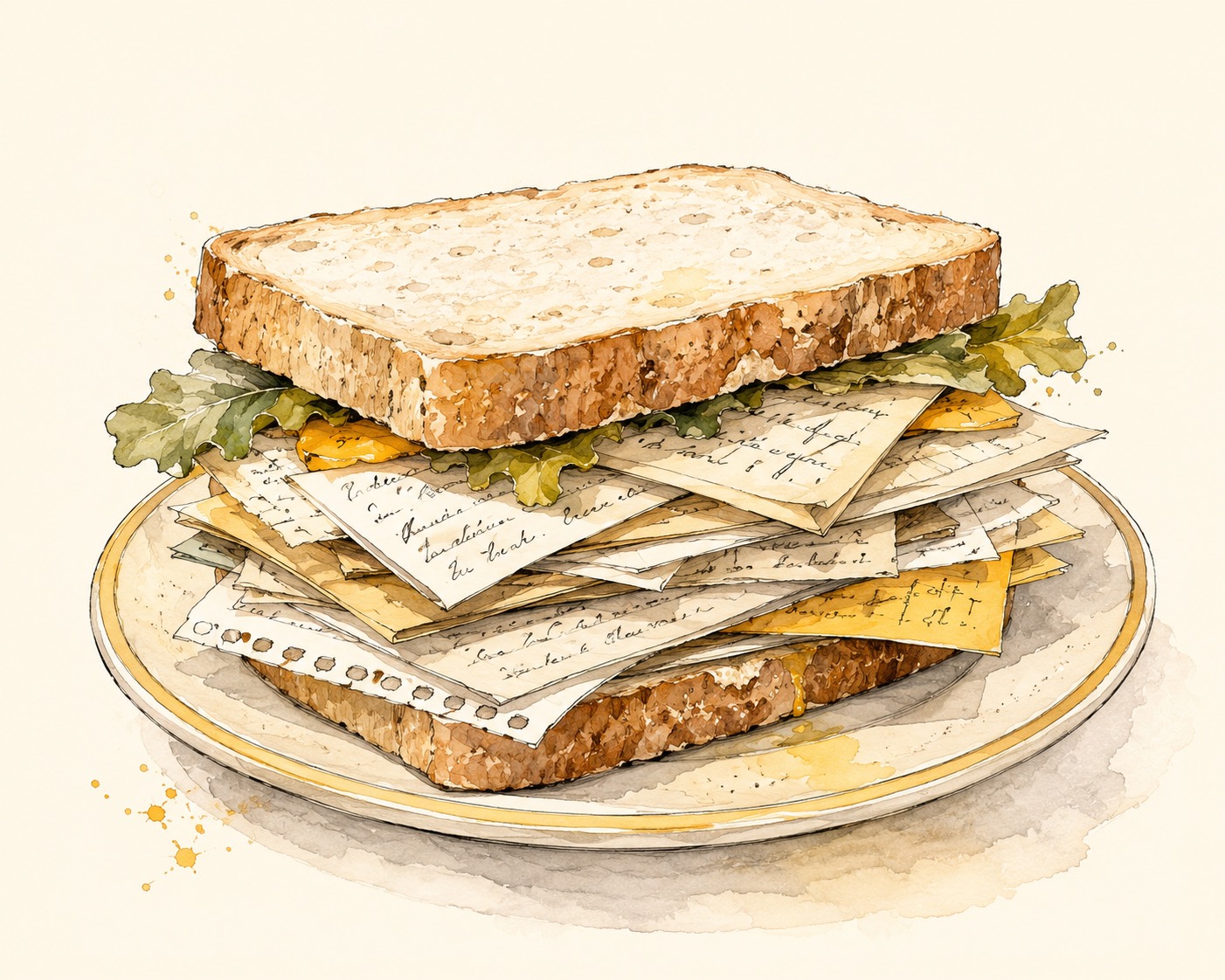
Too many comments can be overwhelming, so pick out your main points and say them clearly. Quite often, focusing on the positives has a disproportionate effect on someone’s improvement and confidence, encouraging them to do more of the same, and leaving smaller negative points for the writer to resolve later.
Constructive criticism
It’s easy to praise a writer’s work, but harder to point out areas of improvement with tact. All negative critique should aim to be constructive: without the ‘constructive’ part, it is simply critical, and may cause offence.
The key is to read or listen carefully (perhaps making notes) and ask yourself what you actually didn’t like about a piece. Be specific about what needs improvement and why it didn’t work for you. If you can’t narrow it down, it’s probably not worth commenting on. Compare:
“It didn’t work for me”
versus
“I felt the timeline was a bit confusing on my first read through. Would it work better to put the information about the monk’s training earlier in the piece, so we know he’s become a monk before he meets the traveller?”
In the second version, the problem has been highlighted, the reason it caused an issue identified, and a possible solution tactfully suggested. In summary: explain specifically what didn’t work for you and why, with tact and diplomacy, of course!
Positive feedback
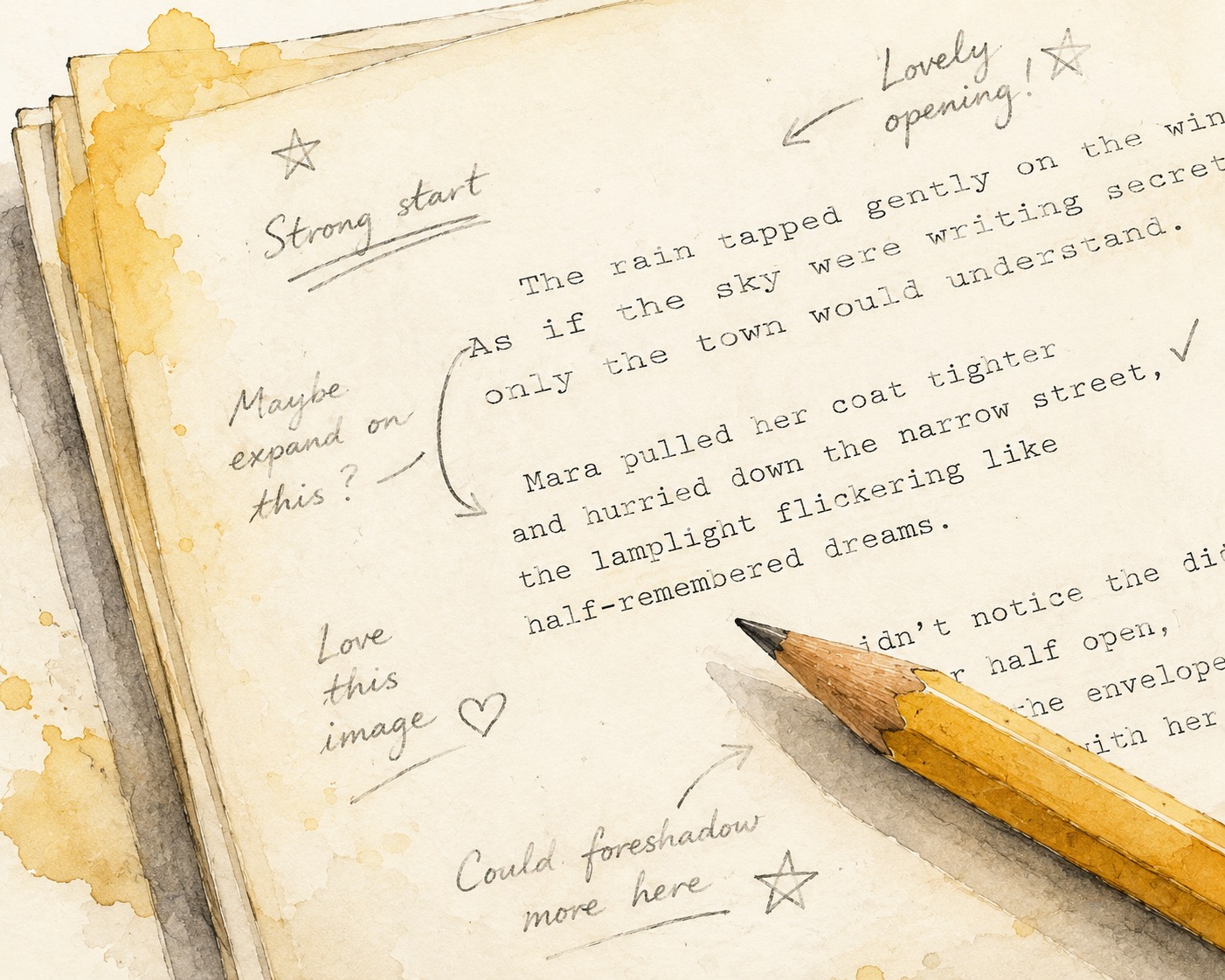
Always try to find something positive to say. It tempers any criticisms, and it encourages the writer to use effective techniques even more. Joe Bunting (see Resources) reimagines the feedback sandwich as an Oreo with a criticism cream filling, suggesting questions for the positive cookie parts such as: What is unique or effective about their writing style? What did you enjoy about their characters? What phrase or paragraph especially stood out to you, and why?
Some ideas to consider when giving positive feedback:
- Your personal reaction: what you loved; favourite moments; any feelings, memories or thoughts evoked
- Plot: effectiveness; twists, surprises and reveals; ingenuity; originality
- Structure: title; organisation; beginnings and endings; for poems, also format, layout, rhyme and rhythm
- Characters: how believably drawn; portrayal; interactions and relationships
- Dialogue: authenticity, placing, amount, effectiveness, pace
- Descriptions: language; emotions engaged; how memorable and evocative of atmosphere and setting
- Immersion: authenticity, plausibility, flow, consistency, tone
- Language: vocabulary, style, appropriateness, uniqueness, pace
- Factual details: accuracy, interest, how enriching
- The idea: take on a theme, originality, topicality, how thought-provoking
- Personal meaning to the writer: memoir, anecdotal pieces, subjects of expertise or interest
- Production: the time, effort and research put in; appreciation for sharing with the group
This is by no means an exhaustive list (as a writer you’ll no doubt think of many more), but it’s a starting point for positive aspects to look out for in a fellow writer’s work.

How to receive feedback
This can be summarised in four steps:
- Point the group at your worries. If there’s a part of your draft you’re unsure about, or something that doesn’t quite gel, say so before you read; it helps people give you specific feedback.
- Listen, and perhaps take notes. The Runaway Writers suggest in their podcast (see Resources) waiting until the end to respond, once all the feedback is in.
- Don’t be defensive. Try not to take things personally; ask questions to follow up on points raised, and take the opportunity to explain what you wanted the piece to accomplish.
- Thank people and mention what you found helpful; it helps your fellow writers give even better advice in future.
Everyone has different ideas and perspectives, and you are entirely free to follow, adapt or ignore any advice you receive. Feedback is invaluable, but as the writer, you always have the last word!
Finally
Remember that your comments should be intended to encourage and support other group members. We are all here to help one another improve, and above all, to enjoy our writing.
Resources
- Bunting, Joe (2014): How to Stay Popular in a Writers Group
- Davis, Suzanne (2018): Writing Groups 101: How to Give & Get Powerful Writing Feedback
- Hertzberg, Karen (2020): How to Give Writing Feedback That’s Constructive, Not Crushing (Grammarly blog)
- Runaway Writers (2020): All the Buzz of a Critique (podcast)
C Bosac, November 2020